 Plantico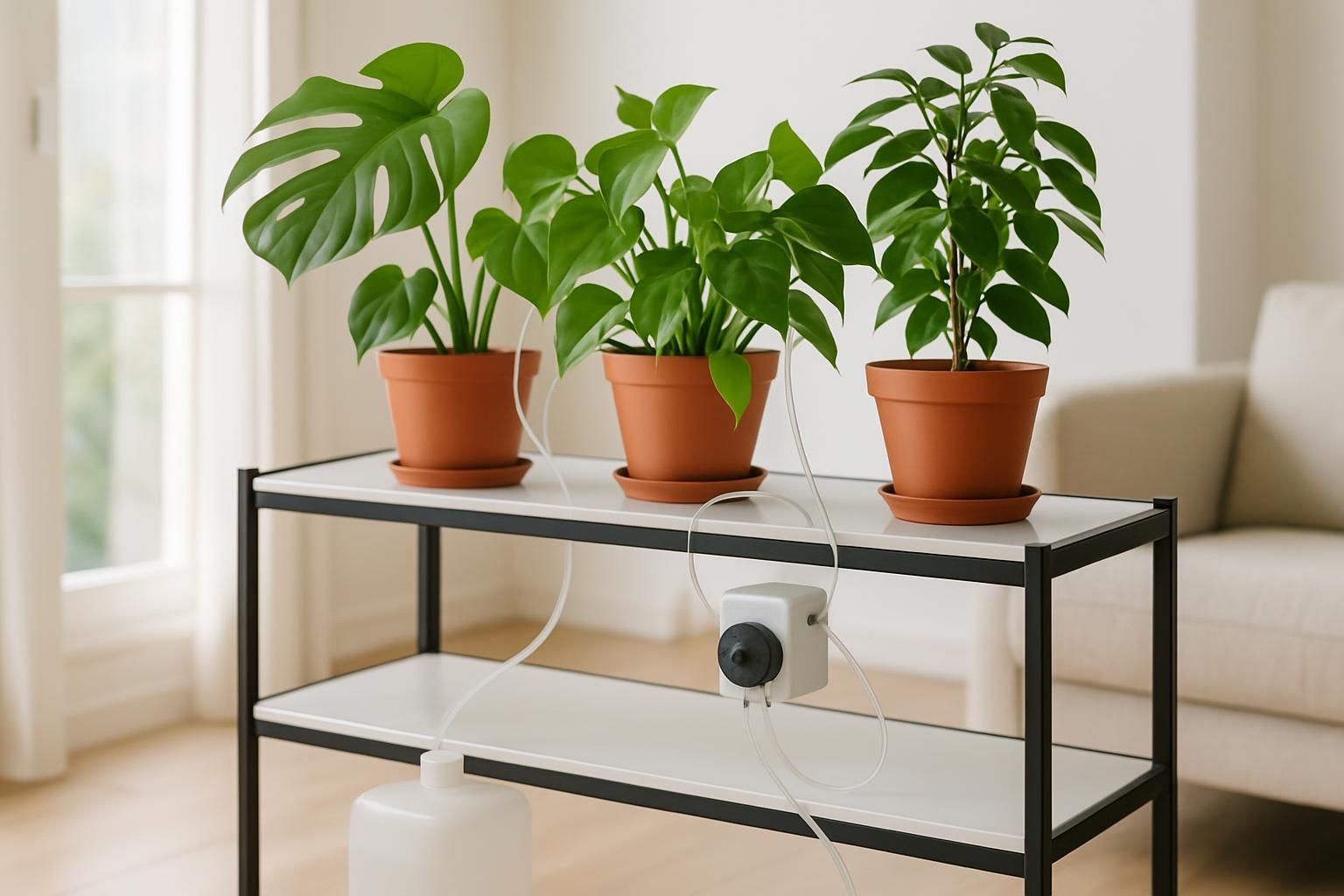
Fertigation combines irrigation with fertilization so plants get water and nutrients in small, predictable doses. Indoors, a simple setup with a reservoir, peristaltic pump, and timer can keep fast-growing houseplants consistently fed while reducing the peaks and valleys that come with occasional hand feeding. This guide explains what fertigation is, which plants benefit, the parts you need, two build options (starter and pro), how to manage EC and pH, and how to maintain the system safely.
What Is Fertigation for Houseplants?
In a home setting, fertigation means delivering a dilute nutrient solution through tubing to the pot at a set interval. Instead of fertilizing once a month, you give very small amounts regularly. The goal is steadier growth, fewer deficiency swings, and less guesswork. With soil or soilless mixes, you can run short pulses that moisten the top few centimeters and gradually wick through the root zone.
How much and how often depends on plant size, potting mix, light, and temperature. A practical starting point for thirsty tropicals is to run enough solution to slightly moisten the medium daily or every other day, with a deeper flush every 2–4 weeks to prevent salt buildup. For example, a 15–20 cm nursery pot might receive 60–120 ml per pulse, then a plain water flush equal to 20–30% of pot volume once or twice a month.
Fertigation is not a free pass to keep roots constantly wet. Roots still need air between waterings. If you see persistent wetness, fungus gnats, or sour smells, reduce pulse volume or frequency and ensure your mix drains well. If you’re unsure about baseline watering needs before automating, review how often to water houseplants.
Who Benefits and Who Should Skip It
Fertigation works best for fast-growing, water-loving houseplants that you keep in active growth under moderate to bright light. Good candidates include:
- Aroids: Monstera deliciosa, Philodendron hederaceum, Epipremnum aureum, Anthurium andraeanum
- Ficus: Fiddle-leaf fig (Ficus lyrata), rubber tree (Ficus elastica), Ficus benjamina
- Herbs under lights: basil, mint, parsley
- Prayer plants (Maranta) and Calathea, if you keep solution gentle and pH in range
Use caution or skip fertigation for:
- Succulents and cacti: they prefer dry cycles; if you automate, keep pulses rare and very small
- Orchids in coarse bark: fertigation can work, but flow control and runoff are trickier
- Carnivorous plants: avoid added nutrients entirely
- Plants in low light during winter: reduce or pause feeding to prevent stretch and rot
If pets can access your setup, route tubing neatly, secure the reservoir lid, and keep concentrates locked away. If a pet ingests fertilizer or drinks nutrient solution, contact a veterinarian.

Core Components of a Home Fertigation System
You can assemble a compact, reliable system with off-the-shelf parts. Here’s what to look for:
- Reservoir: Food-safe bucket or container (3–10 liters) with a tight lid. Opaque is best to reduce algae. Add a bulkhead or grommet for tubing.
- Peristaltic pump: A 12 V or USB model with tubing pinch rollers. They self-prime, resist backflow, and handle nutrients. For small pots, 60–120 ml/min flow is easy to manage; larger shelves can use 200–300 ml/min.
- Control: Smart plug, digital outlet timer, or a microcontroller. Timers that allow multiple short daily events (10–90 seconds) are ideal.
- Tubing and fittings: Silicone or PVC tubing that matches your pump (often 3–4 mm ID). Add barbed tees, check valves, and drip stakes or rings for even distribution.
- Emitters (optional): Low-flow drip emitters (1–2 L/h) can help standardize output across pots. Choose pressure-compensating types if you run multiple plants.
- Catch trays and runoff plan: Every pot needs a saucer or shared tray. Protect shelves with a waterproof liner and ensure you can empty excess.
- Measurement tools: EC/TDS pen and pH meter or drops. Calibrate meters regularly.
- Nutrients: Either a one-part houseplant fertilizer for a starter reservoir or A/B hydroponic nutrients for separate dosing lines. Keep acids and concentrates labeled.
Tip: Place the reservoir below pot level to reduce siphoning. Always include check valves near the pump outlet to prevent backflow that can overwater between cycles.
Two Build Options: Starter and Pro
Starter: Single-Reservoir, Timer-Controlled
This is the simplest path. You mix a large batch of dilute nutrient solution and pulse it on a schedule.
- Mix the reservoir: Use a general-purpose liquid fertilizer at 1/4–1/2 the label’s weekly rate. Stir until fully dissolved. Measure EC and note the value.
- Plumb the line: Pump to main line, then tees to each pot. Add a check valve after the pump. Insert drip stakes or a small ring in each pot to spread flow.
- Program pulses: Start with 30–60 seconds once daily for 12–20 cm pots, or every other day in lower light. Adjust based on moisture. Give plain water until light runoff every 2–4 weeks.
- Seasonal adjustments: Halve the frequency in winter or when growth slows. Pause fertigation for one week after repotting.
Pros: low cost, easy. Cons: EC drifts as water evaporates; solution can go stale if not refreshed. Replace the reservoir weekly and wipe it clean to avoid biofilm.
Pro: Multi-Head Dosing With On-Demand Mixing
For more control, use 2–3 peristaltic pumps: Part A, Part B, and optional acid for pH. The pumps inject concentrates into a mixing tee that feeds the main line.
- Set stock concentrates: Follow the nutrient maker’s stock recipe or mix at a strong but stable ratio (for example, 1:100 as your system target). Keep A and B separate.
- Calibrate pump rates: Run each pump into a measuring cup for 60 seconds to learn ml/min. Record the numbers.
- Program dosing: For each irrigation pulse, run water flow (or keep a water-filled reservoir) and trigger A and B pumps for a few seconds each to reach your target EC at the outlet. Dose acid last to adjust pH.
- Safety spacing: Include short delays between A and B to avoid precipitates; use check valves on every line; flush the mixing line with plain water after each event if possible.
Pros: stable EC and pH, flexible per plant group. Cons: higher cost, more calibration. Many growers control this with a smart plug sequence; others use microcontrollers for finer timing.
Nutrient Management: EC, pH, and Recipes
EC (electrical conductivity) reflects total dissolved salts. pH affects nutrient availability. Keep both in a forgiving range for your specific plants and medium.
- Target EC ranges (in solution delivered):
- Aroids (Monstera, Philodendron, Pothos): 0.8–1.2 mS/cm during active growth
- Ficus (lyrata, elastica): 1.0–1.5 mS/cm if light is strong; 0.8–1.0 in average light
- Calathea/Maranta: 0.6–1.0 mS/cm; they are salt-sensitive
- Herbs under lights: 1.2–1.8 mS/cm, depending on vigor
- pH targets: In peat/coco mixes, 5.8–6.5 works well. In soil-heavy mixes, 6.2–6.8 is common. Adjust gradually if needed.
- Water source: Measure your tap water EC. If it’s already high, consider filtered or RO water to avoid creeping salinity.
- Flushing: Every 2–4 weeks, irrigate with plain water until you see a modest runoff. This helps clear accumulated salts and prevents leaf burn.
- Seasonal dialing: Reduce EC by 25–50% in winter or when plants receive less light. Increase slightly only if growth is strong and leaves look pale without other stress signs.
If leaves yellow after starting fertigation, don’t assume it’s a deficiency. Overwatering, low light, or root issues are more common. Cross-check symptoms with why leaves turn yellow to narrow causes before changing nutrient strength.
Basic recipe for a starter reservoir: choose a balanced houseplant fertilizer (for example, something labeled for foliage with micronutrients). Mix to 1/4–1/2 the bottle’s weekly dose per liter of water. Measure EC, and adjust next batch based on plant response. Keep notes for each plant group so you can refine over time. Plantico can help you group plants and set gentle reminders to refresh the reservoir weekly.
Maintenance, Safety, and Troubleshooting
Regular upkeep keeps fertigation predictable and safe indoors.
- Sanitation: Rinse the reservoir weekly; wipe with a clean cloth. Monthly, circulate a mild cleaning solution (for example, dilute hydrogen peroxide) through lines for 5–10 minutes, then flush with plain water.
- Algae control: Use an opaque reservoir and keep light off lines. If green film appears, clean and cover.
- Meter care: Calibrate pH meters per manufacturer guidance. Rinse EC/TDS pens after use to prolong accuracy.
- Tubing and parts: Replace soft tubing every 6–12 months if it stiffens or cracks. Check valves can clog; keep spares.
- Pet and child safety: Store concentrates in a locked cabinet. Label everything clearly. If ingestion occurs, contact a veterinarian.
Troubleshooting signs and fixes:
- Yellowing leaves: Often low light or too-wet roots, not lack of fertilizer. Shorten pulse time or increase spacing. Review how often to water houseplants for baseline checks.
- Brown tips or salt crust on soil: EC too high or not enough flushing. Lower nutrient strength and do a plain water flush to mild runoff.
- Leaf spotting or sudden wilt: Rule out pathogens before adjusting feed. Use a clean tool to check roots; if you suspect disease, consult the plant disease identifier.
- Uneven flow across pots: Level your shelf, use pressure-compensating emitters, or split your system into smaller zones so each pump line feeds similar pot sizes.
- Drip clogging: Flush lines with warm water. Soak emitters in a mild descaling solution if you have hard water residue.
- pH drift over time: Mix smaller reservoirs more often, or switch to on-demand dosing. Test pH after mixing and after 24 hours to see if it stabilizes.
If plants stall after you start fertigation, scale back to plain water for a week, ensure good light, then reintroduce a gentler EC. It is normal to tweak settings a few times. Plantico can also remind you to run monthly flushes and check EC/pH so adjustments become routine.
Conclusion
Fertigation brings consistency to indoor plant care by pairing watering and nutrition in small, controlled doses. Start simple with a single dilute reservoir and short, infrequent pulses. As you learn your plants’ response, you can refine pulse timing, EC, and pH or graduate to multi-head dosing for even finer control. Keep the basics in mind—healthy drainage, periodic flushing, reasonable light, and safe storage of nutrients—and the system will work quietly in the background while your plants put on steady, resilient growth.