 Plantico
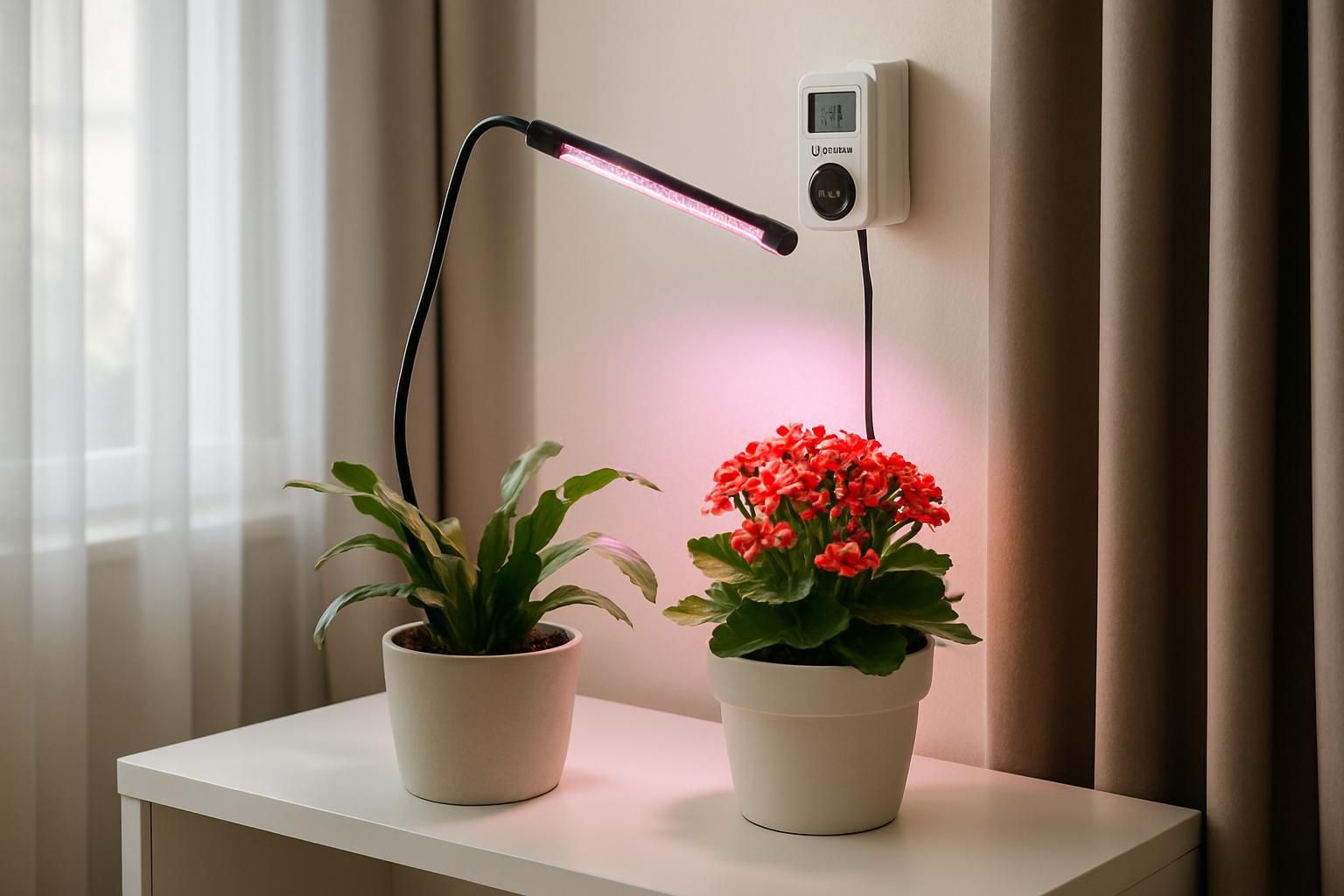
Plenty of houseplants will grow foliage under almost any light schedule, but many only bloom when day length is controlled. That’s good news indoors: with a timer, a grow light, and a simple blackout routine, you can reliably nudge reluctant bloomers into flower. This guide explains what photoperiod is, which common houseplants respond to it, and how to automate light cycles without a grow tent.
What Photoperiod Means Indoors
Photoperiod is the balance of light and darkness across 24 hours. Plants “measure” night length using pigments that reset in light. That’s why even a lamp flicked on at the wrong time can disrupt a bloom cycle. There are three broad responses:
- Short-day plants initiate buds when they get long, uninterrupted nights. Indoors, this means giving them evenings in full darkness for several weeks.
- Long-day plants set buds when nights are short. These are less common as houseplants.
- Day-neutral plants aren’t triggered by day length, but they often bloom better with consistent daily light.
Automation matters because consistency matters. A timer removes guesswork and bad timing, and a blackout routine protects the “night” from stray light. Together, they create repeatable results.
Pick Plants That Respond to Schedules
Before you wire up a timer, confirm whether your plant actually responds to photoperiod. If you’re not sure which species you have, you can use Plantico to identify a plant from a photo and look up its flowering behavior.
- Christmas cactus (Schlumbergera): Classic short-day bloomer. Provide long nights and modestly cool evenings for several weeks to set buds. Avoid sudden light during the dark period.
- Kalanchoe blossfeldiana: Also short-day responsive. Under consistent long nights, dense umbels of flowers form reliably.
- Poinsettia (Euphorbia pulcherrima): Short-day. Commonly “forced” for winter color by controlling night length. Its sap can irritate skin, and ingestion can upset pets; if a pet chews leaves or bracts, contact a vet and see our list of plants toxic to cats.
- African violet (Saintpaulia): More day-neutral than short- or long-day, but steady daily light (not erratic evenings) improves bud set.
- Orchids (many genera): Most aren’t strictly photoperiodic; they bloom with maturity, temperature shifts, and seasonal cues. However, consistent light timing still helps growth.
Most foliage-first houseplants (monstera, pothos, philodendron, snake plant) don’t need special photoperiods to look good. Save your automation effort for plants that reward it with flowers.

Set Up Automated Light Cycles
Here’s a simple, apartment-friendly setup that works on a shelf, rack, or side table.
- Timer or smart plug: A basic digital timer works. A smart plug adds phone control and sunrise/sunset routines. Either way, match the timer’s maximum load to your light’s wattage.
- LED grow light: Use a small panel or bar that covers your plant’s canopy. Start with the light roughly 20–30 cm above leaves for low-heat LEDs and adjust as needed.
- Blackout solution: A light-blocking curtain, a cardboard cover with vent gaps, or a closet with good airflow. The goal is zero stray light during the dark period.
- Thermometer/hygrometer: Night temperatures influence bud formation in some species (e.g., cooler nights help Christmas cactus).
Program your timer based on plant type:
- Short-day routine (Christmas cactus, kalanchoe, poinsettia): Give a relatively short day and a long, uninterrupted night for several weeks. Practical example: lights ON at 8:00 and OFF at 17:00. Keep the plant in complete darkness from 17:00 to 8:00 nightly until buds are well formed.
- Day-neutral bloomers (African violet): Keep a steady day length (for example, lights ON at 7:00 and OFF at 21:00) and avoid big swings between weekdays and weekends.
Once buds are visible and stable, you can gradually relax the blackout routine, but keep daily light consistent through bloom.
Build a Blackout Routine Without a Tent
You don’t need a grow tent to protect the night. These low-cost methods work in living spaces:
- Blackout curtain corner: Mount a room-darkening curtain on a tension rod in a nook. Close it at “lights-off” and open it in the morning. Ensure air can circulate above or below the curtain.
- Cardboard cover: Make a bottomless box from double-wall cardboard lined with blackout fabric or heavy paper. Leave a few discreet vent slots low on the sides so humidity doesn’t spike. The cover should never touch leaves or trap heat.
- Closet schedule: Park your plant on a shelf inside a ventilated closet. Put the grow light inside and the closet light on a separate switch you simply never use during the cycle. Add a small gap for airflow, but ensure no light leaks from windows or hallways at night.
Check for light leaks by standing in the darkened space for a minute; if you can read the spine text on a nearby book, it’s probably too bright. Avoid peeking in with phones or flashlights during the dark period. When you must access the area, keep any light exposure brief and as dim as possible.
Temperature matters too. Short-day species often set buds more readily with cooler nights. For Christmas cactus, aim for comfortable, slightly cool evenings rather than warm, stuffy air. Avoid cold drafts or sitting plants on chilly windowsills where roots could get too cold.
Match Light Intensity to the Plant
Timing only works if intensity is sensible. A dim lamp run for many hours won’t compensate for insufficient brightness, and an overly bright light will scorch shade-adapted leaves even on a short schedule.
- Use a simple meter: A basic lux meter or a reputable phone app gives a ballpark reading. Take measurements at leaf height around midday and when lights are on. Calibrate your expectations by comparing spots.
- Adjust distance, not just time: If your plant stretches toward the light or fails to bud, lower the light a few centimeters or increase daily light duration. If edges bleach or crisp, raise or dim the light.
- Watch leaf feedback: Pale, thin new growth, leggy internodes, and stalled buds suggest too little light. Scorched patches, curled margins, or dull grey-green leaves suggest excess.
If leaves start paling or shedding during a new schedule, light may be part of the problem, but water or nutrition can contribute too. Use our guide on why leaves turn yellow to sort common causes and adjust care in parallel with your light routine.
Common Pitfalls and Troubleshooting
- Night interruptions: A hallway light, TV glow, or phone flashlight can reset short-day plants. Treat the dark period like sleep: quiet and fully dark.
- Timer drift or outages: Mechanical timers can slip after power cuts. Check weekly that on/off times still match your plan. Smart plugs with internal clocks handle short outages better.
- Humidity spikes in blackout: Covers trap moisture. Crack a small gap for airflow, water earlier in the day, and avoid wetting leaves late. If condensation forms inside your cover, increase ventilation.
- Temperature swings: Keep nights gently cool and days comfortably warm. Rapid changes can cause bud drop in Christmas cactus and kalanchoe.
- Watering changes under lights: Plants may drink more with longer days and dry air. Check soil moisture at least twice a week and water when the top 2–3 cm are dry for most bloomers. African violets prefer evenly moist but not soggy mix; avoid wetting fuzzy leaves.
- Expect a lag: Buds don’t appear overnight. Short-day plants typically need several weeks of consistent nights before you’ll see clear swelling at areoles or nodes. Stay consistent.
- Post-bloom care: Deadhead kalanchoe to encourage a second flush. For Christmas cactus, let it rest with slightly reduced watering for a few weeks after flowering, then resume regular light and feeding. Avoid pruning poinsettia bracts until color fades naturally.
Two workflow tips keep things smooth: label the timer with your on/off times so guests don’t tinker, and set recurring tasks in Plantico to remind you when to begin and end a bloom cycle or to check for timer drift.
Conclusion
Blooming indoors isn’t a gamble when you control day length. By pairing a modest LED grow light with a reliable timer and a simple blackout routine, you can give short-day plants the long, quiet nights they crave and keep day-neutral bloomers on a steady, productive schedule. Focus on species that respond to photoperiod, protect the dark period from interruptions, and fine-tune intensity with light placement and plant feedback. With a little planning—and a lot of consistency—you’ll see buds form, open, and repeat on cue, season after season.