 Plantico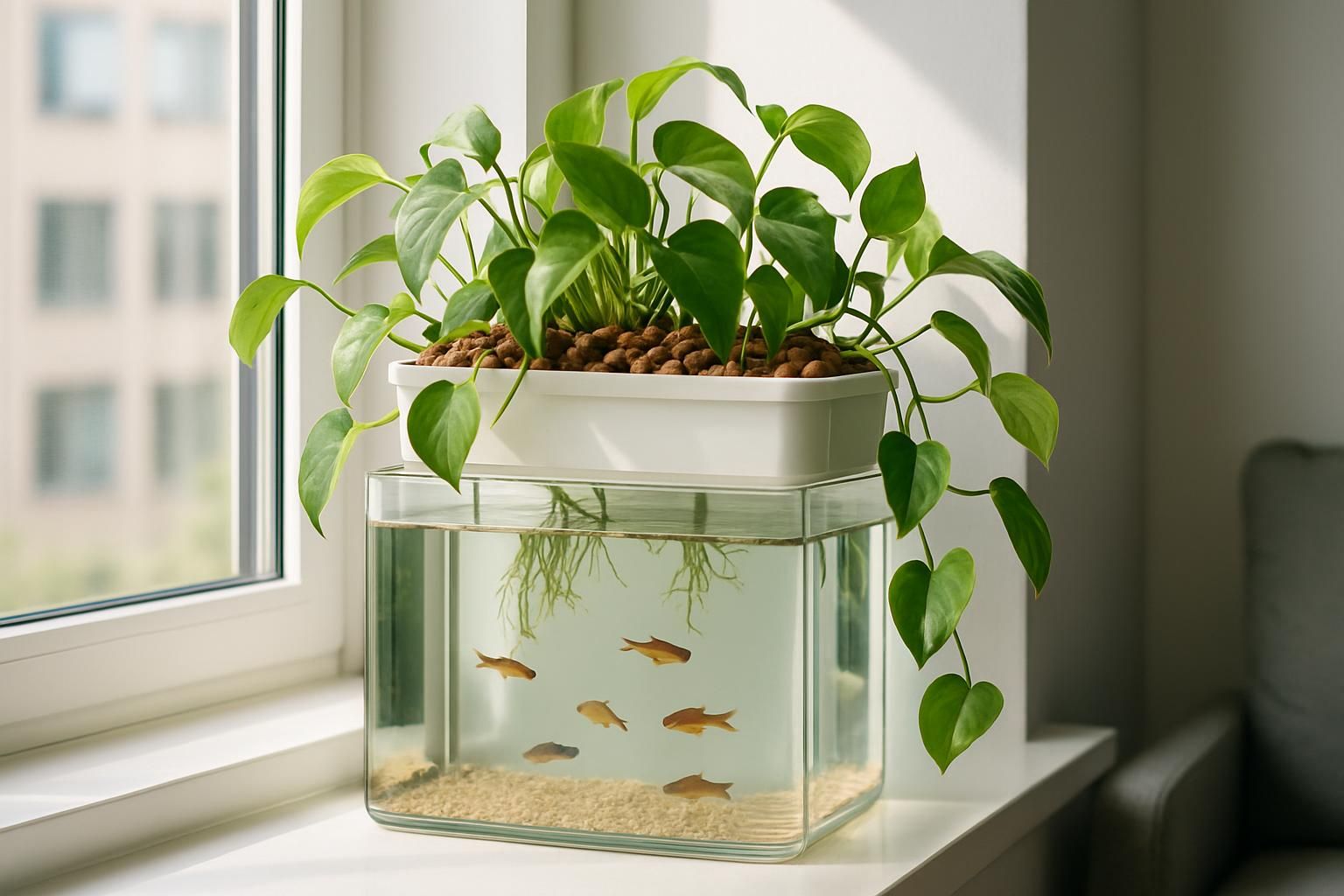
Aquaponics marries fish keeping and hydroponics: fish waste feeds plants, and plants help clean the water. You don’t need a greenhouse or a spare room to try it. With a compact tank, a simple pump, and the right plants, you can create a quiet, self-circulating system that grows lush roots and healthy foliage on a sunny shelf. This guide walks you through a practical, apartment-sized build and the daily habits that keep it running smoothly.
What Is Apartment Aquaponics?
In aquaponics, fish release ammonia into the water. Beneficial bacteria living on filter sponges, clay pebbles, and plant roots convert ammonia to nitrite, then to nitrate. Plants use nitrate and other dissolved nutrients for growth, helping to maintain better water quality for the fish. A small pump moves water from the tank up through plant roots and media, and gravity returns it to the tank. Done right, the loop is quiet, low-odor, and surprisingly stable for its size.
For houseplants, this semi-hydro arrangement has a few advantages:
- Constant access to moisture without waterlogged potting soil
- Steady trickle of dilute, fish-derived nutrients
- Fewer salt crusts than with bottled fertilizers
- Compact footprint that fits a windowsill or sideboard
Because tanks under about 20 liters (5 gallons) swing quickly in temperature and chemistry, aim a little larger for stability. You’ll still be firmly in apartment territory.
The Smallest Setup That Works
You can keep this simple and reliable with off-the-shelf parts. A typical, proven layout:
- Tank: 20–40 L (5–10 gal) glass aquarium or clear storage tub with a tight lid to reduce evaporation.
- Filtration: Air-driven sponge filter for biological filtration and gentle circulation.
- Pump and plumbing: Small submersible pump (roughly 200–400 L/h), vinyl tubing, and a return spill back to the tank. Add a prefilter sponge to the pump intake.
- Plant container: A food-safe plastic planter or tray sitting above the tank, filled with rinsed expanded clay pebbles (LECA). Cut slits or a drain hole so water trickles back.
- Lighting: Bright window light or a full-spectrum LED grow light on a timer (aim for bright, indirect light for most aroids).
- Test kit and conditioner: Freshwater tests for ammonia, nitrite, nitrate, and pH, plus a water conditioner to remove chlorine/chloramine from tap water.
- Safety: Drip loops on all cords and a GFCI outlet for anything near water.
Place the planter so that pumped water flows through the LECA and roots and then returns to the tank without splashing. Keep plant crowns above the water line so only the lower stems/roots stay wet.

Best Houseplants for Aquaponics (and Why)
Choose species that tolerate constant root moisture and grow new roots readily. Start with one or two and expand as the system matures.
- Epipremnum aureum (Pothos): Fast to root, forgiving, and excellent at mopping up nitrates. Keep its crown dry.
- Philodendron hederaceum (Heartleaf Philodendron): Trails easily; cuttings root quickly in moving water.
- Monstera adansonii: Enjoys airy, wet roots; give bright, indirect light to prevent leggy growth.
- Syngonium podophyllum (Arrowhead Vine): Adapts well to semi-hydro; prune to manage vigor.
- Spathiphyllum (Peace Lily): Strong nitrate uptake; keep the base out of constant splash to prevent crown rot.
- Chlorophytum comosum (Spider Plant): Tolerates wet roots; offsets can be started directly in LECA.
- Scindapsus pictus (Satin Pothos): Slower than pothos but steady; likes higher humidity.
- Dracaena sanderiana (Lucky Bamboo): Stems must stay above water; only roots submerged.
If you’re unsure whether a cutting you have is suitable, identify it first so you can check its tolerance for semi-hydro. Try a quick photo ID with identify a plant from a photo.
Fish and Microbes: Build a Stable Cycle
Resist the urge to add fish on day one. A stable nitrogen cycle takes time to establish, and patience pays off with clear water and healthier plants.
- Set up and plant: Assemble the system, rinse LECA thoroughly, run the pump and sponge filter, and add your starter plants or cuttings.
- Dechlorinate: Treat tap water to remove chlorine/chloramine, which can harm beneficial bacteria and fish.
- Seed bacteria: Add a bottled nitrifying bacteria product or let the system develop naturally. You can also add a small pinch of fish food daily to feed emerging bacteria.
- Test and wait: Over the next 2–4 weeks, test ammonia, nitrite, and nitrate. You’re ready for fish when ammonia and nitrite read zero on a reliable test and nitrate is detectable.
- Add fish lightly: Start with a small group of hardy, compatible species and feed sparingly. Increase stock only if tests stay stable and plants show steady growth.
Good starter choices include small livebearers like Endler guppies, white cloud mountain minnows (for cooler rooms), or a single betta in a calm setup. Many keepers also add a few snails to graze algae. Research compatibility and temperature needs before buying fish.
Target a pH that’s comfortable for both fish and plants; a mild, near-neutral range works well for most apartment setups. Keep tropical species near their preferred temperature, and avoid wide day–night swings.
Day-to-Day Care and Maintenance
Once cycled, your routine centers on topping up water, keeping flow steady, and trimming roots before they tangle returns.
- Top-offs: Evaporation concentrates minerals. Top up with dechlorinated water to the original fill line. If your room is very dry, a lid reduces loss and noise.
- Feeding: Offer fish small portions they finish quickly. Overfeeding clouds water and fuels algae.
- Filter care: Every week or two, rinse the sponge prefilter in a bucket of tank water (not tap) to preserve bacteria.
- Root trims: Roots grow fast in nutrient-rich flow. Trim them back with clean scissors if they begin to block the drain or return.
- Light management: Provide bright, indirect light. If algae coats the glass, reduce day length or move the tank out of direct sun.
- Nutrients: Most systems won’t need bottled fertilizers. If new leaves are pale with green veins, consider a fish-safe, chelated iron product at label rates. Avoid general houseplant fertilizers in the tank.
- Reminders: Set a monthly nudge to test water and clean the prefilter. A simple calendar or your plant care app works well for this.
Keep cords and tubing tidy, with drip loops below outlet height. Vibrating pumps quiet down if you place them on a thin foam pad.
Troubleshooting: Plants and Water Quality
Most problems trace back to overfeeding, too much light, or rushing stocking. Use your test kit and plant leaves as early warning signs.
- Yellowing leaves: Older leaves yellowing first often point to nitrogen being used faster than it’s supplied. Feed fish a bit more or add a fish or two only if tests stay safe. For other yellowing patterns, see why leaves turn yellow.
- Brown spots or edges: Splash burn from strong light, potassium deficiency in very soft water, or inconsistent moisture at the crown can all mark leaves. Trim damaged tissue and adjust light and flow.
- Algae bloom: Green water or fuzzy growth means excess light and nutrients. Cut back day length, shade the back and sides of the tank, and wipe glass. Don’t use algaecides with fish present.
- Root rot or mushy stems: Crowns kept wet will fail. Raise plants so only roots touch water and increase flow through the LECA.
- Ammonia or nitrite detected: Stop adding fish, feed lightly, and do a partial water change with dechlorinated, temperature-matched water. Confirm the sponge filter is bubbling or the pump is running smoothly.
- pH drift: Very soft water can trend acidic over time. A small mesh bag of crushed coral in the filter can gently buffer. Make changes gradually and retest.
Many popular houseplants are toxic to pets if chewed. Mount planters securely and keep trailing vines out of reach. If a pet ingests any plant, contact a veterinarian promptly. For common risks, see plants toxic to cats.
If you’re troubleshooting plant health and aren’t sure whether the cause is water, light, or a pathogen, scan for patterns on new versus old leaves, check roots, and test water before making big changes. If you suspect disease, remove affected leaves promptly and improve airflow around foliage above the planter.
Conclusion
Aquaponics can be as simple as a modest tank, a sponge filter, a slow pump, and a pothos cutting, yet it brings a steady rhythm to plant care: top up, trim, test, observe. By cycling patiently, stocking lightly, and choosing houseplants that enjoy perpetual moisture, you’ll build a compact, living loop that rewards tiny daily habits with sturdy roots and clean water. Start small, keep notes, and expand only when your tests and plants tell you the system is ready.