 Plantico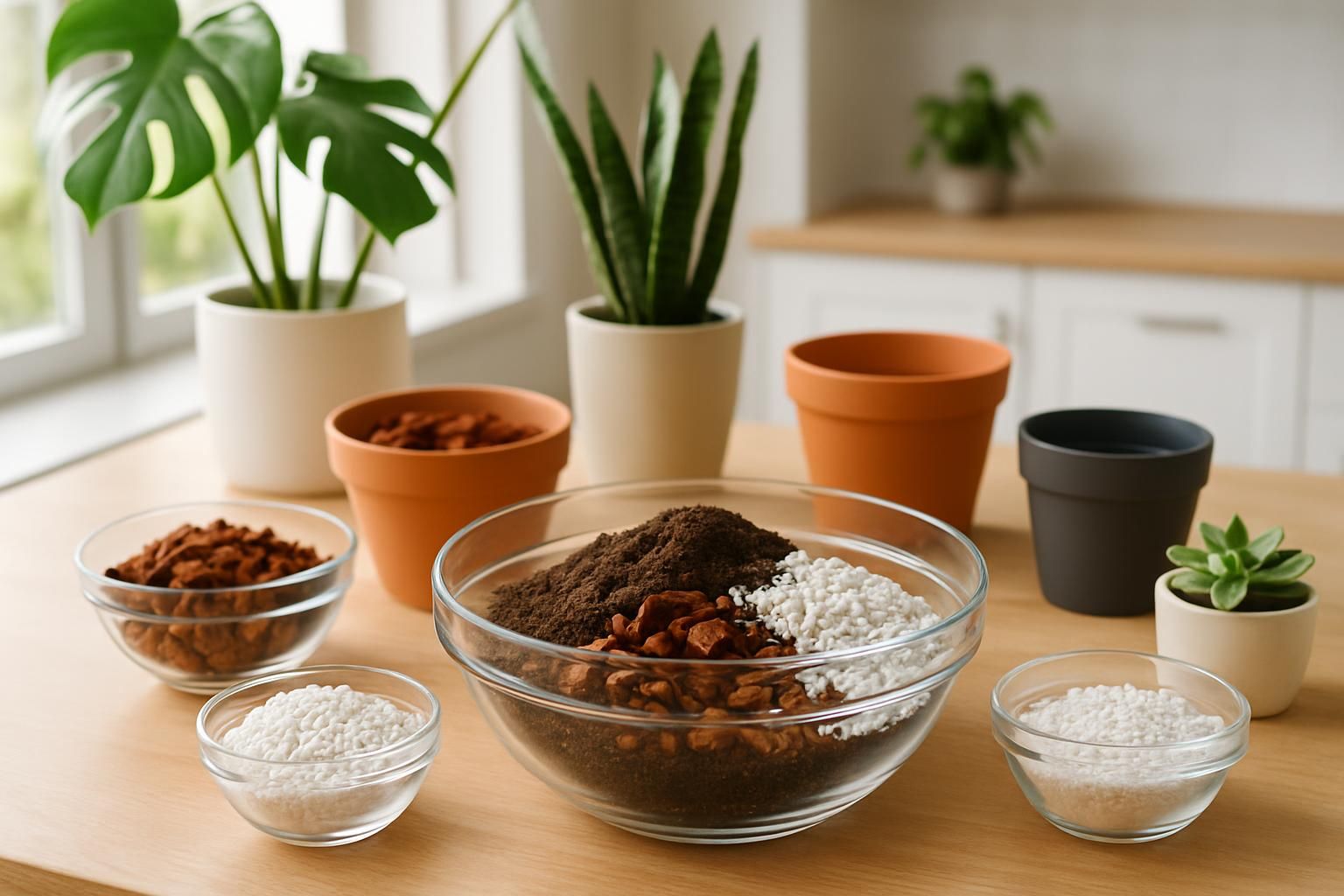
The right soil is more than dirt in a pot. It affects how fast your plant dries out, how roots breathe, and how often you’ll need to water. This guide breaks down what “good houseplant soil” actually means, the roles of common ingredients, and easy, species-tested recipes you can mix at home with materials from any garden center.
What Good Houseplant Soil Really Means
Potted plants don’t have the endless drainage of the ground, so your mix must balance three things:
- Drainage: Water should move through quickly so roots aren’t sitting in a swamp.
- Aeration: Air pockets between particles keep roots oxygenated and reduce rot.
- Moisture holding: The mix should still retain enough water to carry your plant between waterings.
Most tropical houseplants prefer slightly acidic to neutral conditions and a chunky, airy structure. Succulents and cacti need very fast drainage with minimal water retention. Always use a pot with a drainage hole. Adding rocks at the bottom does not improve drainage and can trap water against roots.
Think of ingredients as building blocks: fine materials (peat, coir) hold water, while coarse materials (bark, perlite, pumice) create air spaces. Adjust the ratio to suit the plant and your home’s conditions. If your home is very dry and warm, choose mixes that hold a bit more moisture. If it’s cool and dim, use a faster-draining mix so pots don’t stay wet for too long.
Common Ingredients and What They Do
- All‑purpose potting mix (peat or coir based): The moisture‑holding base. Coir rewets more easily and is a good peat alternative.
- Orchid bark (fir or pine): Chunky pieces that boost aeration and mimic the airy root zones many aroids and epiphytes enjoy.
- Perlite: Very light, creates air pockets and speeds drainage. Rinse to reduce dust before use.
- Pumice: Heavier than perlite; improves drainage without the floaty mess. Great for succulents.
- Coarse horticultural sand: Adds weight and drainage for cacti and succulents. Avoid fine play sand, which compacts.
- Coco chips: Chunkier coir pieces that act like mini bark; hold moisture but keep structure open.
- Worm castings: Gentle, slow‑release nutrition; use sparingly (a handful per small pot). Indoors, avoid rich composts that can invite fungus gnats.
- Horticultural charcoal: Optional. Adds porosity and can help keep mixes fresh; use as part of the chunky fraction.
- LECA (clay balls): Used for semi‑hydro systems. Not a direct substitute in standard potting mixes.
Safety note: Avoid breathing dust from dry mixes, perlite, or vermiculite. Pre‑moisten ingredients and mix outdoors or in a well‑ventilated area. Wash hands after handling potting media.

Simple Soil Recipes by Plant Type
Use “parts” by volume (a cup, a scoop, or a bucket). Pre‑moisten the mix until it holds together when squeezed but doesn’t drip.
Aroids (Monstera, Philodendron, Pothos, Syngonium)
- 2 parts all‑purpose potting mix (coir or peat based)
- 1 part orchid bark
- 1 part perlite or pumice
- Optional: a small handful of worm castings per 6–8 inch pot
Result: A chunky, airy mix that drains well but doesn’t dry to dust between waterings. Ideal for Monstera and climbing Philodendron that like air at the roots. If your home is dry and warm, swap some perlite for coco chips to slow drying slightly. For species‑specific care, see our monstera care guide.
Snake Plant (Dracaena trifasciata, formerly Sansevieria)
- 2 parts cactus/succulent mix
- 1 part pumice or perlite
- Optional: a small handful of bark for structure
Result: Fast‑draining with little water retention. Snake plants rot quickly in heavy soil. Water deeply, then let the top 5–7 cm dry before watering again. For more details, see our snake plant care guide.
Succulents and Cacti
- 1 part all‑purpose potting mix
- 1 part coarse horticultural sand
- 1 part pumice or perlite
Result: Very rapid drainage. In cool, low‑light homes, increase the pumice fraction. In hot, bright homes, keep the potting mix fraction slightly higher to prevent extreme speed‑drying.
Calathea, Maranta, and Prayer Plants
- 2 parts coir‑based potting mix
- 1 part perlite
- 1 part fine bark or coco chips
- Optional: a light sprinkle of worm castings
Result: Moisture retentive yet airy. These plants dislike drying out completely. Keep the top 2–3 cm just barely dry before rewatering. Use room‑temperature, low‑mineral water when possible.
Hoyas
- 1 part all‑purpose potting mix
- 1 part orchid bark
- 1 part perlite or pumice
Result: Epiphytic roots that like to breathe. Allow the top 3–4 cm to dry between waterings; many Hoyas prefer a slightly drier cycle than aroids.
Ferns (Boston, Bird’s‑nest, Maidenhair)
- 2 parts all‑purpose potting mix
- 1 part fine bark or coco chips
- 1 part perlite
Result: Consistently moist but not boggy. Check the top 1–2 cm often; ferns protest if they dry fully. Consider a plastic pot (slows evaporation) nested in a decorative cover pot.
African Violets
- 2 parts African violet mix (or fine peat/coir mix)
- 1 part perlite
Result: Light, fluffy, and evenly moist. Bottom water to keep leaves dry. If using peat, avoid hard tap water that can lead to surface crusting.
Not sure what you’re growing? Use Plantico to identify a plant from a photo, then match it to the closest recipe above.
Pot Prep, Mixing, and Repotting Steps
- Choose the right pot: Always use a drainage hole. Size up only 2–5 cm wider than the current root ball to avoid a wet rim of unused soil.
- Pre‑moisten your mix: Add water a little at a time and toss until evenly damp—no dry pockets, no runoff when squeezed.
- Free the roots: Gently tease circling roots and remove a third of the old, exhausted mix. Prune mushy, dark roots.
- Set the height: Add some fresh mix, place the plant so the root flare sits at the same depth as before, and backfill.
- Settle, don’t smother: Tap the pot and lightly firm to remove big voids, but keep the mix springy.
- Water through: Water until it runs from the drain hole. Let excess drain fully. Don’t leave the pot standing in water.
Skip the gravel layer myth. A uniform mix from top to bottom lets water move predictably, reducing perched water at the pot base.
Watering and Soil: Match the Mix to Your Routine
Your soil choice should support how you water and your home’s conditions:
- If you water infrequently: Choose mixes with a bit more fine material (coir/peat) and fewer chunky additives.
- If you tend to overwater: Increase bark and pumice/perlite. Use terracotta pots to speed drying.
- In bright, warm spots: Mixes dry faster—slightly increase the moisture‑holding fraction or use a cover pot to slow airflow.
- In low light or cool rooms: Use a faster‑draining recipe and water less often to prevent soggy roots.
Learn the feel of your pots: lift before and after watering to gauge weight. Check moisture 2–3 cm down with your finger or a wooden skewer. For detailed scheduling tips, see how often to water houseplants.
Troubleshooting Soil Problems
Soil speaks—here’s how to listen and fix issues quickly:
- Staying wet for a week or more in low light: Too fine a mix or too large a pot. Move to brighter light, add airflow, and repot into a chunkier recipe or a smaller pot.
- Yellowing lower leaves and limp stems: Possible root stress from overwatering or poor aeration. Review your mix and watering cadence; our guide on why leaves turn yellow can help you pinpoint the cause.
- Crispy edges, fast‑drying soil: Mix is too coarse for your environment. Add more coir/peat or switch to a plastic pot to slow evaporation.
- Hydrophobic peat (water pools on top, won’t soak in): Bottom‑water the pot for 30–60 minutes to rehydrate. Consider switching to coir‑heavy mixes that rewet more easily.
- Fungus gnats: Let the top 2–3 cm dry between waterings, bottom‑water when possible, and avoid rich compost indoors. Top‑dress with a thin layer of coarse sand or pumice to deter egg‑laying.
- Sour or swampy smell: Mix stayed anaerobic. Unpot, trim any black mushy roots, and repot into a fresher, chunkier mix.
When changing a mix, do it gradually if the plant is sensitive. Shift one step at a time—add a little more bark or pumice at the next repot rather than a complete overhaul during a growth lull.
Conclusion
Great houseplant care starts at the roots. Choose a pot with a drain hole, build a mix that balances air and water for your specific plant, and match that mix to your home and watering style. Keep notes on how long each pot takes to dry and adjust the recipe at the next repot. If you’re unsure of the plant you have, use Plantico to identify it and start with the closest recipe here, then fine‑tune based on how your pot dries over one to two weeks. With a good mix, watering becomes simpler, roots stay healthier, and growth follows.