 Plantico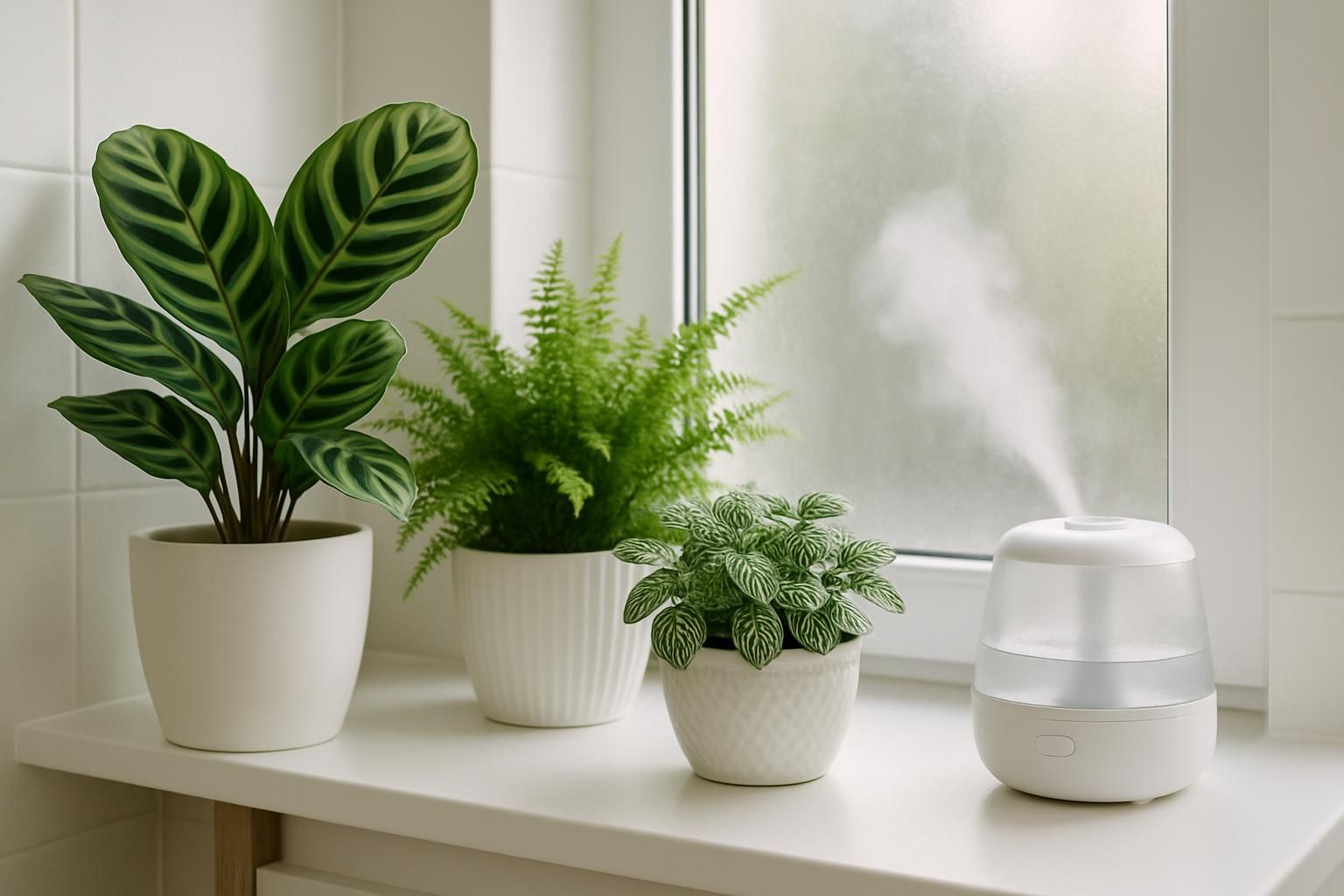
If your leaves have crisped edges, curled tips, or seem stuck in slow motion, the air may be too dry. Humidity is simply how much moisture is in the air. Most tropical houseplants grow under canopies where the air stays more humid than a typical heated or air-conditioned room. The good news: you can measure humidity at home and nudge it upward without turning your space into a jungle fog.
Why Humidity Matters For Houseplants
Plants move water from their roots to their leaves, where it evaporates through tiny pores (stomata). When the air is very dry, leaves can lose moisture faster than roots can replace it. The result is stress signals you can see and feel:
- Crispy or brown leaf edges on thin-leaved plants (Calatheas, Marantas, ferns).
- Leaf curling or cupping as the plant tries to reduce surface area.
- Stalled new growth or small, misshapen leaves.
- Faster soil drying that can lead to underwatering if you keep your old schedule.
Not every plant wants the same air. Succulents and cacti are built for drier rooms. Thick-leaved tropicals like Hoyas and many Peperomias are comfortable in the middle. Thin, velvety, or finely divided leaves usually prefer more moisture around them. If you’re unsure what you have, use Plantico to identify a plant from a photo and check its typical habitat.
How To Measure Humidity At Home
You don’t have to guess. A small digital hygrometer shows relative humidity (RH) as a percentage. Here’s how to get a useful reading:
- Place the hygrometer at leaf height, close to your plant cluster, not on a cold window sill or directly above a radiator.
- Check readings morning and evening for a few days to learn your home’s range. Heating and AC can swing RH throughout the day.
- Note microclimates: bathrooms and kitchens are usually higher; south-facing window bays can be drier and hotter in direct sun.
- Log RH alongside watering dates. You’ll start to see patterns between dry air and faster soil drying.
Tip: If your hygrometer shows very low RH for long stretches and you see crispy edges on humidity-loving foliage, it’s time to act. If your plants look fine and readings hover in a moderate range, you likely don’t need major changes.

Smart, Low-Fuss Ways To Raise Humidity
Start with placement and simple physics. Then add tools if needed. Stack the following methods for the biggest effect.
1) Group Compatible Plants
Plants release moisture as they transpire. Cluster humidity-lovers together so they create a more humid bubble for each other. Keep a few centimeters of space between pots for airflow.
2) Use Room Choice To Your Advantage
Bathrooms with a window, bright kitchens, or laundry areas often have naturally higher humidity. Move ferns, Calatheas (Goeppertia), and Fittonias to these rooms if light is adequate. Keep succulents, snake plants (Sansevieria), and ZZ plants in living rooms or bedrooms where air is drier.
3) Set Up Pebble Trays Correctly
Pebble trays can gently lift humidity immediately around foliage. The key is keeping pot bases above water so roots never sit wet.
- Choose a watertight tray a little larger than your pot’s footprint.
- Fill with rinsed aquarium gravel or stones to a depth of 2–3 cm.
- Add water to just below the top of the stones.
- Set the pot on the stones, not in the water.
- Top up water as it evaporates; rinse stones monthly to discourage buildup.
4) Run a Cool-Mist Humidifier
A small ultrasonic or evaporative unit is the most effective way to raise RH in a plant corner. Position it a short distance from foliage so a visible plume doesn’t constantly wet leaves or soil. Aim the output to dissipate into the air, not directly at a plant.
- Use clean water. If your tap water is very hard, consider distilled or filtered to reduce white dust on leaves and furniture.
- Clean the tank and any filters regularly following the manufacturer’s instructions. A weekly quick rinse and a deeper clean every 1–2 weeks helps prevent mineral and microbial buildup.
- Run on a timer during the day when lights are on and air movement is better. Turn off at night if you notice condensation on windows or walls.
Set gentle reminders in Plantico to refill and clean your humidifier so upkeep doesn’t slip.
5) Add Airflow, Not Just Moisture
Higher humidity without air movement can encourage leaf spots. A small fan on low, angled past your plants (not straight at them), keeps air fresh and reduces stagnant pockets.
Match Plants To Rooms And Conditions
When you meet a plant halfway—choosing the right spot for its natural preference—you’ll do less work. Use these pairings as a starting point and adjust based on your hygrometer and the plant’s feedback.
- Lower-humidity tolerant (good for living rooms and offices): Snake plant (Sansevieria), ZZ plant (Zamioculcas zamiifolia), jade plant (Crassula ovata), ponytail palm (Beaucarnea), cacti. Prioritize bright light and let soil dry more between waterings.
- Moderate humidity (most homes): Monstera deliciosa, pothos (Epipremnum aureum), Philodendron hederaceum, rubber plant (Ficus elastica), Hoya. Grouping helps smooth out drier spells.
- Higher humidity (best near kitchens/bathrooms with windows or with a humidifier): Prayer plants (Maranta), Calatheas (Goeppertia), nerve plant (Fittonia), maidenhair and Boston ferns (Adiantum, Nephrolepis), many mosses and terrarium species.
If a plant keeps crisping up even with grouping and trays, don’t fight it—move it to a naturally more humid room or choose a species that matches your space better. For species-specific care, see focused guides like monstera care and snake plant care.
Seasonal Adjustments And Troubleshooting
Indoor humidity isn’t static. Heating dries winter air, while summer may feel more comfortable yet air conditioners can create dry pockets. Adjust your routine as conditions shift.
- Winter: Move humidity-loving plants away from radiators and heat vents. Use pebble trays plus a humidifier in bright rooms. Watch soil moisture; drier air can make mix dry faster even though growth is slower. If you’re unsure about timing, our guide on how often to water houseplants can help you reset your schedule.
- Spring: New growth appears just as homes often remain dry. Keep humidity support steady for a month or two while leaves mature.
- Summer: Ventilate on warm days. If you run AC, monitor RH near cold air streams and move sensitive plants out of direct airflow.
- Autumn: As nights cool, humidity can naturally climb. Dial back humidifiers if you notice condensation on windows in the morning.
Reading the leaves helps you separate humidity issues from others:
- Crispy brown edges on thin leaves often signal dry air or inconsistent watering. If edges blacken in blotches or spots appear after frequent misting, check for leaf spot fungi; see brown spots on leaves and use the plant disease identifier for pattern matching.
- Uniform yellowing can come from overwatering or root stress rather than humidity. If you see this, start with watering and drainage; this explainer on why leaves turn yellow covers common causes.
- Leaf edges curling inward may be dry-air stress, heat, or intense sun. Lower heat, raise humidity slightly, and soften light.
Myths To Skip (And What To Do Instead)
- Misting as a main strategy: A quick spray raises RH for only minutes and can promote leaf spots on susceptible plants, especially in low light. Instead, group plants and use trays or a humidifier for a steady, gentle boost. If you still mist, do it in the morning so leaves dry by evening.
- Covering radiators with wet towels or placing bowls of water around the room: These have tiny, inconsistent effects. Put the same effort into a small humidifier you can measure and maintain.
- Sealing plants under plastic for weeks: Short-term humidity tents help cuttings root, but long-term, stagnant air encourages disease. If you use a dome or bag during acclimation, vent daily and remove once the plant perks up.
- Chasing a specific number for every plant: Let the species and your space guide you. If leaves look healthy and growth is steady, your humidity is good enough.
Conclusion
Humidity is one lever among many, and it’s easier to manage than it seems. Measure with a simple hygrometer at leaf height, watch how your plants respond, and try the least-intrusive fixes first: better room choice, grouping, and correctly set pebble trays. Add a cool-mist humidifier for steady support in the driest months, and pair moisture with gentle airflow to keep foliage clean and healthy. If you’re unsure about a plant’s preferences, use Plantico to identify a plant from a photo and tailor your setup. With a few adjustments—and eyes on the leaves—you’ll keep growth moving and edges soft, even when indoor air gets parched.