 Plantico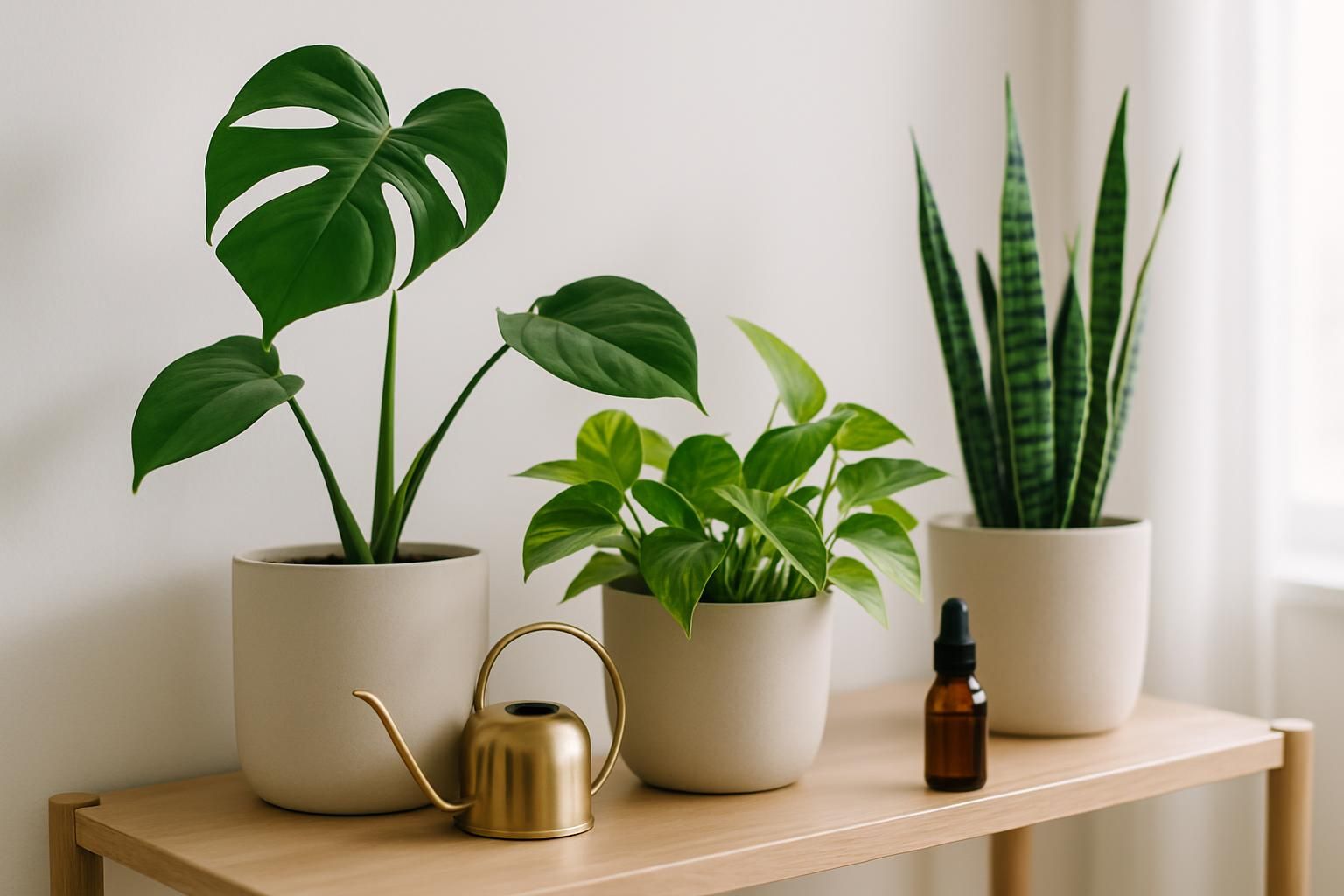
Potting mixes don’t feed plants forever. As your houseplants grow, they use up available nutrients, and watering gradually washes the rest away. Fertilizer replaces what’s missing so leaves can stay green and growth stays steady. This guide explains what fertilizer does, how to choose one, when and how much to use, and simple species notes so you can feed confidently without burning roots.
What Fertilizer Does for Houseplants
Fertilizer supplies the essential nutrients plants need beyond light, water, and air. The big three on the label are nitrogen (N), phosphorus (P), and potassium (K):
- Nitrogen supports leafy, green growth.
- Phosphorus supports roots, blooms, and overall energy transfer.
- Potassium supports resilience, stems, and disease tolerance.
Most houseplants also benefit from smaller amounts of calcium, magnesium, iron, and other micronutrients. Fresh, high-quality potting mix contains some nutrients, but these decline after a few months. That is why a plant can continue to look fine for a while and then stall or pale. Feeding at the right time and strength keeps growth even and reduces stress.
Because nutrients are dissolved in water, salts can accumulate in containers over time. This looks like a white crust on the soil surface or pot rim and can lead to leaf tip burn. The fix is simple: water thoroughly so excess drains out, and every couple of months flush the pot with plain water to wash out built-up salts.
Choosing the Right Fertilizer
You do not need a complicated shelf of products. Pick one dependable fertilizer that matches your plant types and your routine.
- Liquid concentrates: Easy to dilute and apply with your regular watering. Good if you like small, frequent feedings or grow many foliage plants.
- Slow‑release granules: Pellets that release nutrients gradually over a few months. Handy if you prefer fewer steps, but harder to adjust midseason.
- Balanced vs. specialized: A balanced formula (equal or near‑equal N, P, K) suits most foliage plants like pothos and Monstera. Bloomers and succulents often do better with lower nitrogen or a bloom‑leaning formula during their active phase.
- Organic vs. synthetic: Organic options (derived from natural sources) are often gentler but may smell and release nutrients more slowly. Synthetic options are precise and consistent. Either can work if you dilute correctly.
Practical rule: for mixed houseplant collections, a balanced, complete liquid fertilizer you can dilute to half or quarter strength is the most flexible starting point.

When to Feed (And When to Pause)
Most houseplants grow fastest in spring and summer when there is more light. That is the best time to feed. In autumn and winter, many slow down; feeding then often does more harm than good.
- Fast-growing foliage (pothos, Monstera deliciosa, spider plant, tradescantia): Feed every 4 weeks in spring and summer at half the label rate. Pause or reduce to every 6–8 weeks in low light or winter.
- Slow growers (snake plant, ZZ plant, Hoya): Feed every 6–8 weeks at quarter to half strength in spring and summer. Skip winter unless you see clear new growth.
- Prayer plants and calatheas: Sensitive roots. Feed lightly every 4–6 weeks at quarter to half strength during active growth.
- Cacti and succulents: Feed sparsely: once in late spring and once in mid‑summer with a dilute, low‑nitrogen formula. Do not feed in winter.
- Orchids and African violets: Use a product formulated for them at low strength every 2–4 weeks when they are producing new leaves, roots, or buds. Pause during rest.
Newly repotted plants in fresh mix need little or no fertilizer for 4–6 weeks. Recently purchased plants are often well fed at the nursery; give them a few weeks to acclimate before you start a routine.
How Much to Use: Start Low and Observe
More fertilizer does not mean faster growth. It is safer to underfeed slightly than to overfeed. A simple approach:
- Start with one-quarter to one-half of the label’s recommended dose for houseplants.
- Watch new leaves for color and size over 4–6 weeks. If growth is pale or very small despite good light, increase to half strength.
- If you see crispy tips, brown edges, or a white crust on the soil, reduce strength or frequency and flush the pot thoroughly with water.
Remember that watering frequency and light affect feeding needs. Plants that drink more in bright light will receive more dissolved nutrients even at the same dilution. If you are adjusting your watering routine, this guide can help: how often to water houseplants.
Step-by-Step: Feeding Without Burning Roots
- Check the soil: If the potting mix is bone dry, water lightly first and wait 15–30 minutes. Then apply your diluted fertilizer. This prevents concentrated solution from rushing through dry channels and scorching roots.
- Dilute accurately: Use a measuring spoon or syringe; avoid “glug and guess.” Mix thoroughly in your watering can.
- Apply slowly: Pour around the soil surface until water just begins to drain. Do not soak leaves unless the product explicitly allows foliar feeding.
- Flush periodically: Every 2–3 months, water with plain, lukewarm water until you see generous drainage to wash out salts.
- Wipe residue: If fertilizer splashes on leaves, wipe with a damp cloth.
For plants sharing a saucer or cachepot, empty any standing runoff after 10–15 minutes so concentrated solution does not wick back into the soil.
Troubleshooting Feeding Problems
- Yellowing leaves from the bottom up: Could be natural aging or a sign of underfeeding or overwatering. Compare symptoms here: why leaves turn yellow.
- Brown tips or margins: Common with fertilizer salt buildup or low humidity in sensitive plants. See patterns and fixes: brown spots on leaves.
- White crust on soil or pot rim: Salt accumulation. Flush the pot thoroughly with plain water and reduce strength or frequency.
- Stalled growth despite good light: Increase dilution slightly, confirm your last repot date, and check roots for crowding.
- Leaf drop after feeding: Usually a combination of too-strong solution and dry soil. Pre‑moisten next time and cut the dose.
If you are unsure what plant you have, feeding becomes guesswork. Use Plantico to identify a plant from a photo so you can match a safe schedule to that species. You can also set gentle reminders in Plantico for seasonal feeding and flushing.
Species-Specific Notes (Quick Reference)
- Monstera deliciosa: Medium feeder. Half-strength balanced liquid every 4 weeks in spring–summer. Flush every 2–3 months to avoid salt on aerial roots.
- Pothos (Epipremnum aureum): Forgiving. Half-strength every 4–6 weeks when actively vining. In low light, feed less often.
- Snake plant (Sansevieria/Dracaena trifasciata): Light feeder. Quarter to half strength every 6–8 weeks in warm months only.
- ZZ plant (Zamioculcas zamiifolia): Very light feeder. Quarter strength every 6–8 weeks in spring–summer; skip if light is low.
- Calathea/Maranta (prayer plants): Sensitive to salts. Quarter strength every 4–6 weeks. Use gentle, complete fertilizer and flush regularly.
- Hoya: Slow, steady feeder. Quarter to half strength every 6 weeks in bright light. Pause in winter.
- African violet: Low strength every 2–4 weeks during active growth with a violet‑specific or balanced fertilizer.
- Phalaenopsis orchids: Low strength orchid fertilizer every 2–4 weeks when making new roots/leaves. Rinse bark media monthly.
- Cacti and desert succulents: Low‑nitrogen formula once in late spring and once mid‑summer at low strength. Never feed in winter rest.
- Ferns (Boston, bird’s nest): Gentle feeders. Quarter strength every 4–6 weeks in spring–summer. Do not feed dry ferns.
Common Myths and Safer Alternatives
- Coffee grounds in pots: Grounds can compact soil and grow mold indoors. Compost them first or skip. Use a measured liquid fertilizer instead.
- Banana peels on soil: Decompose slowly, attract pests, and do not provide balanced nutrition. Choose a complete product designed for containers.
- Strong doses for quick results: High concentrations often burn fine roots. Consistent, dilute feeding produces better growth.
- Misting as feeding: Regular foliar misting does not supply nutrients. It can help humidity briefly but is not a fertilizer substitute.
Safety and Storage
- Store fertilizers sealed, upright, and out of reach of children and pets.
- Wipe spills immediately and rinse tools and measuring spoons after use.
- If a pet chews fertilizer granules or drinks solution, contact a veterinarian for advice. Keep the product label handy.
- Do not mix products unless the label allows it. When in doubt, use plain water and resume feeding at a lower strength later.
Conclusion
Feeding houseplants is simpler than it seems: choose a suitable, complete fertilizer, dilute more than you think, apply during active growth, and flush occasionally to prevent salt buildup. Pay attention to light and watering, since they determine how much nutrition your plant can actually use. With a consistent, low‑risk routine and a few species tweaks, you will see steadier growth, deeper greens, and fewer issues all year.