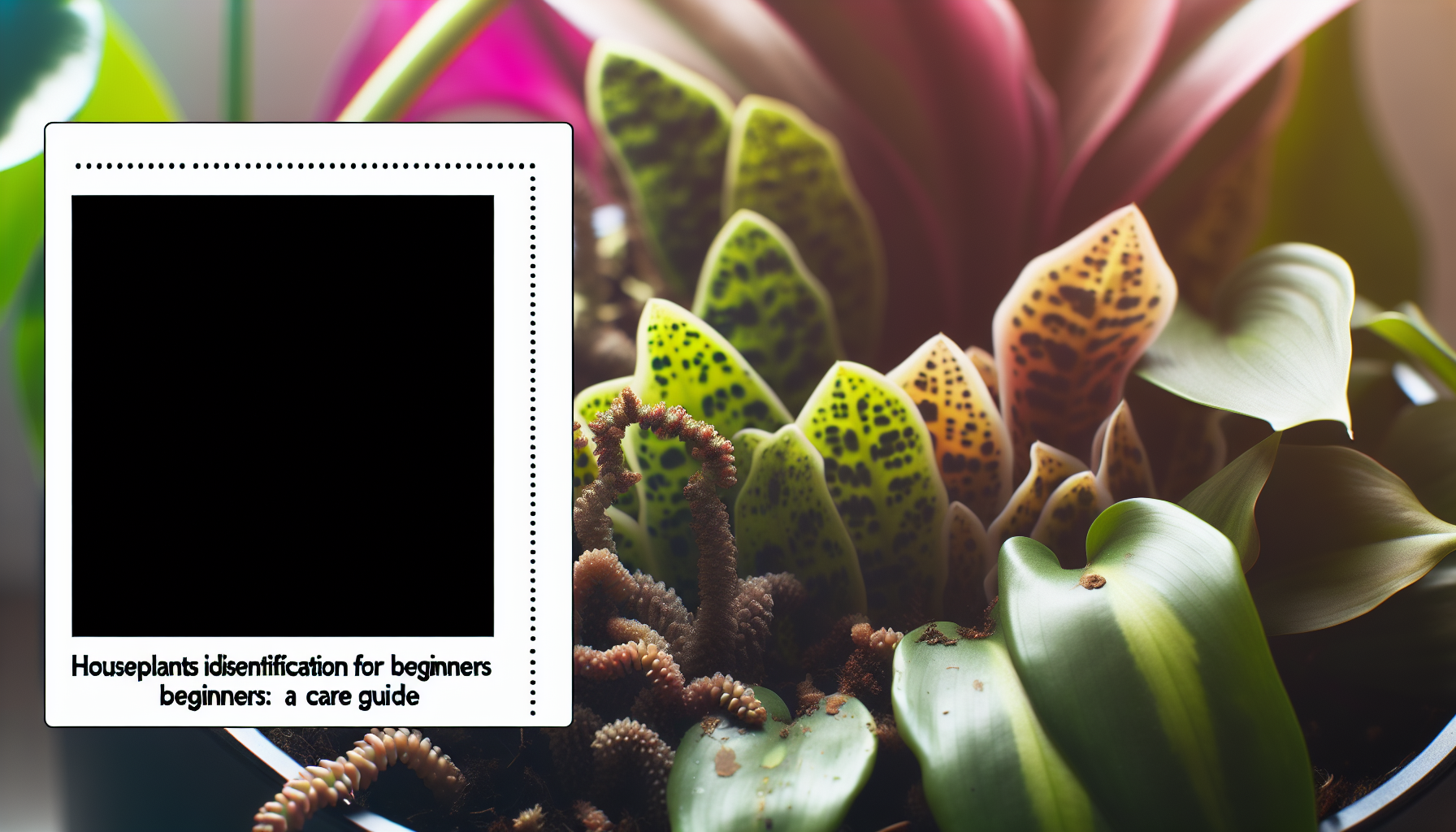
Introduction
Learning to identify houseplants is a rewarding skill for beginners. It helps you select appropriate care, prevent toxic mixups in households with pets, and avoid common watering mistakes. In this guide, you’ll learn a practical framework to observe plants, compare features, and confirm your identifications with reliable references. We’ll cover essential clues such as leaf shape and arrangement, growth habit, stem texture, and overall plant form. With a little practice, you’ll move from guessing to confident recognition, even when plants look similar at a glance. The approach is friendly to busy lifestyles: start with a few easy cues, keep a simple photo record, and build your own mental catalog over time. Let’s begin with the basics.

Starting with the basics: observing key plant features
Begin by noting the most stable features that don’t change much the moment a plant is stressed: leaf form, leaf margins, leaf arrangement, venation, and the overall growth habit. These cues are your first, most reliable identifiers. Look closely at the leaves and ask: are they simple or compound? Are the edges smooth, serrated, or lobed? Is the leaf arrangement opposite, alternate, or whorled along the stem? Observe the vein pattern: pinnate, palmate, or parallel. Finally, consider how the plant grows in your space: does it stand upright, trail from a shelf, or form a compact rosette? This collection of clues builds a solid hypothesis you can test against trusted references.
- Leaves: shape, margin, and arrangement; e.g., oval leaves with smooth edges vs. lance-shaped leaves with serrated margins.
- Venation: pinnate vs. palmate, and unique patterns.
- Stems and petioles: thickness, color, nodes, and internode length.
- Growth habit: upright clump, trailing vine, or sprawling ground-cover.
- Flowers or scent: presence and structure when applicable.
With these cues, you can form a working ID hypothesis to test against references.
Recognizing common beginner-friendly plant groups
Grouping plants by familiar families helps you anticipate ID cues and typical care. For each group, look for a few telltale signs that separate it from others.
- Heartleaf pothos and philodendron: trailing vines, heart-shaped leaves, and interspersed petioles along a slender stem. Pothos leaves usually have variegation; philodendron leaves may be more matte and uniform.
- Snake plant (Sansevieria) and ZZ plant (Zamioculcas): stiff, upright leaves; snake plant leaves are sword-like with sharp edges; ZZ leaves are thicker and more rounded at the tip.
- Monstera and related aroids: large, glossy leaves that may develop splits or holes as they mature; juvenile leaves are whole and heart-shaped.
- Spider plant (Chlorophytum comosum): arching, narrow leaves and offsets that form on long runners; often seen in hanging pots.
- Succulents like Echeveria or Haworthia: thick, fleshy leaves arranged in rosettes; drought-tolerant and compact growth.
Tip: these groups share care tendencies, so recognizing one helps with the rest, but always verify with a reference as features can vary by cultivar.
Tools, references, and best practices for accurate identification
Use a practical toolkit and a patient approach to ID. Start by documenting each plant with clear photos: a full view, a close-up of leaves, a close-up of the stem where possible, and a shot of any unique markings or flowers.
- Photo records: keep a simple gallery with notes on where you found the plant and any care conditions.
- References: consult reliable field guides or reputable websites that focus on houseplants and common cultivars.
- Apps and community input: plant identification apps can be helpful, but cross-check results with two sources, especially for unusual plants.
- Creating a checklist: leaf shape, arrangement, venation, and growth habit should align with the ID you’re testing.
Practical tip: when in doubt, label the plant temporarily and observe for a couple of weeks as new growth emerges; often ID becomes clearer with time.
From ID to care: applying knowledge to daily plant care
Identifying a plant correctly is the first step toward giving it the right care. Once ID is confirmed, tailor your regimen to its needs rather than guessing from a friend’s plant. For most beginners, light, water, and soil are the main drivers of health.
- Light: match the plant’s native habitat to indoor light levels; some prefer bright, indirect light, others tolerate lower light.
- Water: establish a watering routine that suits the plant’s root zone and soil type; avoid overwatering by checking soil moisture.
- Soil and potting: use a well-draining mix appropriate to the plant group (cacti/succulents vs tropical foliage).
- Temperature and humidity: protect from drafts; many tropicals appreciate consistent warmth and moderate humidity.
- Pest checks and care: inspect regularly for pests and signs of stress; healthy plants are easier to ID and care for over time.
Propagation and repotting decisions: if growth is crowded or stems are leggy, consider propagating healthy cuttings or repotting to encourage robust growth.
Conclusion
With the habits of observation established, you’ll identify more plants faster and with greater confidence. This guide has shown you how to start with stable features, group common plants for quicker cues, tap into reliable references, and translate identification into practical care. The key is consistent practice: photograph from multiple angles, track how plants respond to light and water, and compare with trusted sources rather than relying on memory alone. Over time you’ll build a mental catalog of signatures and cultivate a curious, methodical approach to plant knowledge. If you keep a simple journal, your ability to identify and care for houseplants will steadily improve, turning beginner curiosity into confident cultivation.
Leave a Reply